
The Morning You Notice It
It usually happens on the first genuinely cold morning. You hit the opener button on your way to work and the door hesitates, groans, or jerks partway up before continuing. Maybe it's slower than usual, or the opener light blinks and the door reverses for no obvious reason. Nothing was wrong with it in September. The difference is the temperature, and in this part of Michigan, that first real cold snap has a way of exposing every bit of wear a garage door was quietly building up all year.
Before the deep cold, snow, and road salt settle in for the season, it's worth spending an hour in the garage checking the parts that cold weather is hardest on.
Springs Don't Like Cold Metal
Garage door springs are under constant tension, and cold makes steel less forgiving. A spring that was already fatigued from years of cycling can finally give out once temperatures drop, often announcing itself with a loud bang from the garage. If your door feels noticeably heavier when lifted by hand, or the opener strains and makes a grinding or whining noise it didn't make in summer, the springs are telling you something. Spring replacement isn't a DIY project — the tension involved can cause serious injury — but it's one of the most common pre-winter calls for a reason. Catching a weakening spring in October beats discovering a snapped one in a January driveway with the car trapped inside.
Weatherstripping and Seals
Check the rubber seal along the bottom of the door and the weatherstripping around the sides and top. Summer humidity and UV exposure can leave this rubber cracked, flattened, or pulling away from the track. Once winter arrives, a gapped seal lets in cold air, melting snow, and the slushy, salty water that runs off cars and boots. That moisture finds its way to the floor, and in a garage that stays below freezing for weeks at a time, it can refreeze into ice right at the threshold — which then interferes with the door closing fully. Replacing worn weatherstripping now is inexpensive and takes very little time, and it's one of the simplest ways to keep a Michigan winter out of the garage.
Openers, Sensors, and Cold-Weather Lag
Garage door openers can behave oddly in deep cold. Chain and belt drives tighten up slightly, lubricant inside the mechanism thickens, and battery backup units (if you have one) lose some capacity in low temperatures — the same reason car batteries struggle in January. If your opener has been sluggish, reversing unexpectedly, or not responding to the remote from inside the car, have it checked before the real cold arrives. Also wipe down and visually inspect the photo-eye sensors near the bottom of the tracks. Road salt spray and winter grime build up on the sensor lenses, and a dirty or misaligned sensor is one of the most common reasons a door won't close in winter, often misread as a mechanical failure when it's really just a smudged lens.
Tracks, Rollers, and Road Salt
Salt brine and the slush that drips off vehicles do more than rust bumpers — they get into garage door tracks and rollers too. Over a winter, that salty moisture can cause rollers to stick, bind, or rust in place, making the door run rough or noiseless until it suddenly isn't. Before winter, clean the tracks of summer dust and cobwebs, then apply a garage-door-specific lubricant (not WD-40, which is a cleaner, not a lubricant) to the rollers, hinges, and springs. Doing this now, and again partway through winter, cuts down on the grinding and sticking that salt and cold both make worse.
The Balance Test
A quick way to catch problems before they become emergencies: disconnect the opener by pulling the release cord, then lift the door halfway by hand. A properly balanced door will stay in place on its own. If it drifts down or shoots upward, the spring tension is off, and the opener is working harder than it should to compensate — harder still once cold weather adds extra strain. This is a five-minute test worth doing every fall, especially with Michigan's freeze-thaw cycles putting extra stress on hardware all winter long.
Mud Season Is Coming Too
It's easy to focus only on the cold, but the spring thaw that follows deep winter brings its own trouble: mud, standing water, and shifting ground around the garage slab. A door that closes tight and seals well in December is in a much better position to handle the mess that March and April bring. Winter prep and mud-season resilience are really the same job.
When to Call Warren Overhead Door Co
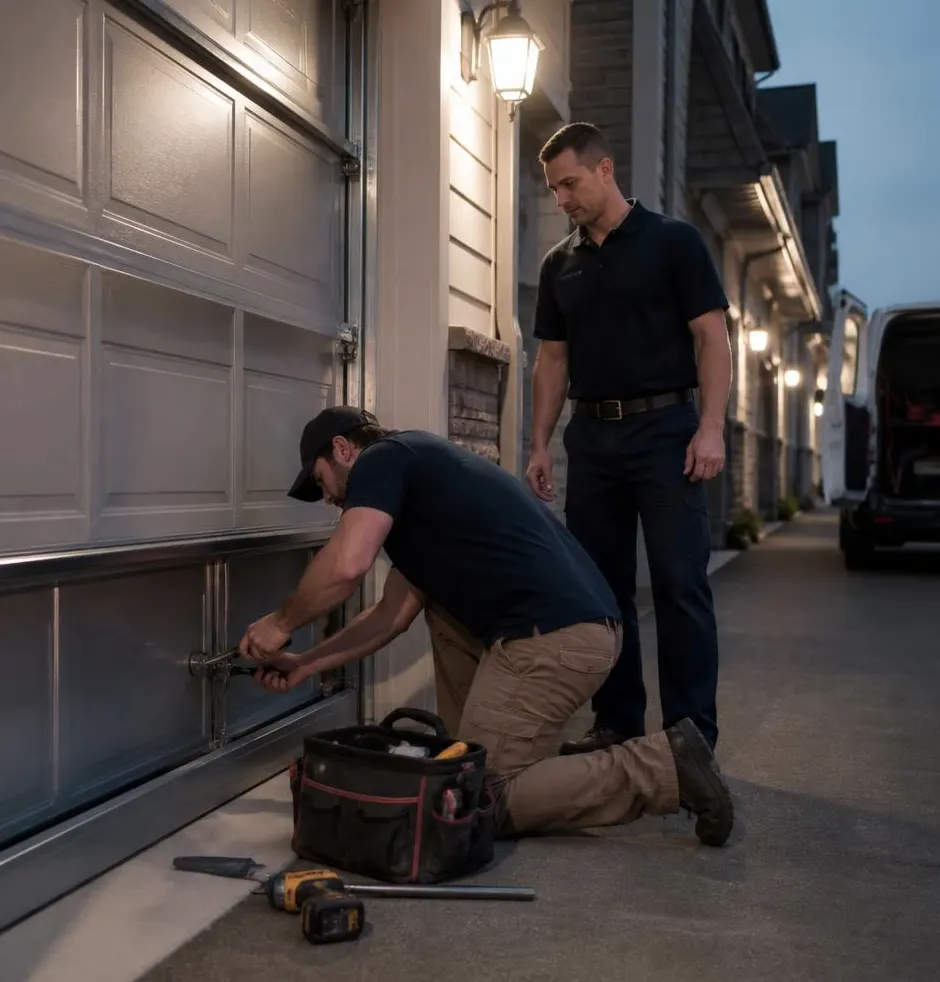
If your door is slow, noisy, uneven, or the balance test shows it's out of sync, that's the time to call rather than wait for a full breakdown in the middle of a snowstorm. Warren Overhead Door Co handles spring replacement safely with the right tools and tension equipment, and our garage door maintenance visits cover exactly the things cold weather wears down — rollers, tracks, weatherstripping, opener performance, and sensor alignment — so the whole system is working together before the hard freeze sets in. We also handle garage door opener services if cold-weather lag or sensor issues are the real culprit rather than the door itself.
If you're in Warren, Sterling Heights, Roseville, Eastpointe, Center Line, Clinton Township, St. Clair Shores, or Fraser and want your garage door checked out before winter settles in, give Warren Overhead Door Co a call. We show up on time, diagnose it correctly, and get it handled before the cold makes it worse.